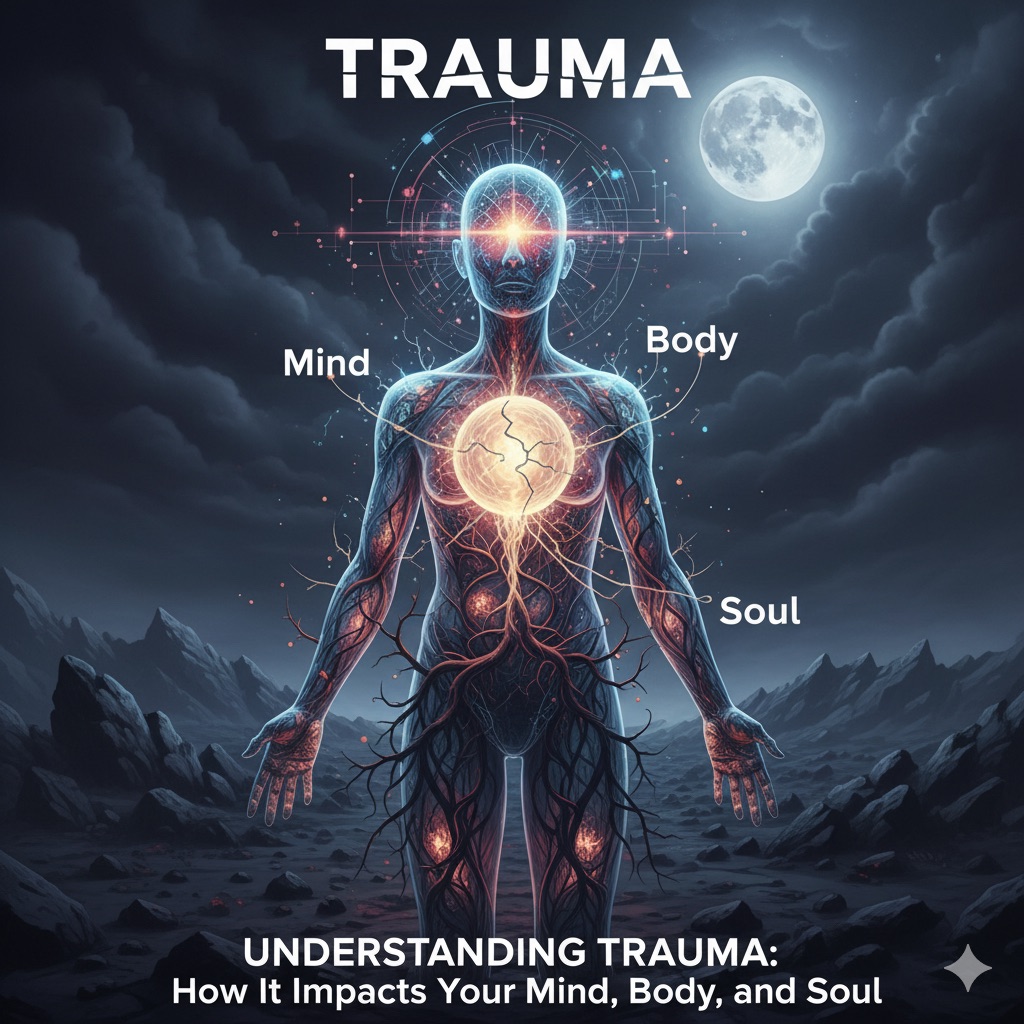
What is betrayal?
Betrayal is described as the violation of trust through disloyalty, infidelity, or dishonesty — and it cuts at the core of your sense of safety.
The Psychological and Physical Impacts of Betrayal
Psychological: Betrayal by someone you loved can be traumatic, cause distress, create a sense of lost respect, and leave you feeling emotionally harmed.
Physical: Your nervous system may react as if under constant threat, producing symptoms like a racing heart, shaking, digestive issues, sleep disturbances, and physical pain.
Trauma: Betrayal is recognised as a form of psychological trauma that can have long-lasting effects on your sense of trust and safety.
What Trauma Really Is
Some people assume trauma is simply what happens to you. But trauma is actually what happens inside you as a result of an event. It’s a wound to your nervous system, mind, and soul — a response to experiences that overwhelm your ability to cope, process, or feel safe.
Think of it as:
“Too much, too fast, too soon — or too little for too long.”
There are three main forms of trauma:
- Acute trauma: A single overwhelming event, such as a car accident, assault, loss, breakup, or betrayal.
- Chronic trauma: Repeated distress over time, like bullying, ongoing neglect, emotional abuse, or living in an unstable environment.
- Complex trauma (C-PTSD): Long-term trauma, often in childhood or close relationships, that undermines your sense of safety, identity, and trust.
Trauma affects your brain and body in profound ways, impacting your memory, emotions, and ability to function.
What Happens in the Brain and Body
When trauma occurs, your body and brain shift into survival mode:
- Amygdala (fear center): Goes on high alert, scanning for danger constantly.
- Hippocampus (memory center): Struggles to organise events, leaving memories fragmented or “stuck in time.”
- Prefrontal cortex (logical, reasoning center): Shuts down, making it difficult to process or make sense of events.
- Nervous system dysregulation: Swings between:
- Hyperarousal: Anxiety, panic, anger, racing thoughts.
- Hypoarousal: Numbness, exhaustion, shutdown, forgetfulness.
This explains why trauma can leave you feeling foggy, detached, or unable to recall key parts of an event — your mind is protecting you.
Emotional and Psychological Effects
Trauma can reshape how you view yourself and the world:
- Loss of trust in others, in God, or even in yourself.
- Carrying shame (“It was my fault”) or guilt (“I should’ve done more”).
- Emotional flatness or constant tension.
- Flashbacks, nightmares, or intrusive thoughts.
- Emotional compartmentalisation — disconnecting from your feelings or memories.
Trauma can make the world feel unsafe, relationships unpredictable, and your emotions too dangerous to face.
Memory and Forgetting
When trauma is too painful, your brain may tuck it away — not erased, but sealed off. This is why we sometimes “forget” key events or remember them only in fragments. This isn’t weakness — it’s protection. Over time, these sealed-off memories may surface as:
- Unexplained anxiety or sadness
- Emotional numbness
- Physical symptoms like fatigue, headaches, or muscle tension
- Difficulty connecting with others
Memory loss from trauma arises from both physiological stress and psychological coping mechanisms — your brain’s way of saying, “This is too much to carry right now.”
Four Main Psychological Defense Mechanisms I Will Be Focusing On
- Dissociation: Detaching from yourself, your emotions, or your environment. You may feel like an outside observer in your own life.
- Repression: Unconsciously burying painful events to function daily, even though the emotions linked to them persist.
- Emotional numbing: Memories remain, but your emotional connection is muted. This protects you from being overwhelmed by grief, anger, or longing.
- Dissociative amnesia: Actual memory gaps caused by trauma, protecting you from the unbearable weight of certain memories.
Key differences:
- Dissociation = detachment
- Repression = unconscious forgetting
- Emotional numbing = muted feelings
- Dissociative amnesia = memory gaps
It’s possible to experience all four in response to one relationship or person who caused complex trauma. Each mechanism plays a role in survival, especially when trauma comes from someone close. Your brain cycles through these defences depending on the intensity of pain, closeness of the person, and sense of safety.
“I can’t handle all of this — I’ll split it up so I can survive it bit by bit.”
This is why C‑PTSD is exhausting — survival mode becomes the norm, and your mind keeps switching between shutting down, forgetting, detaching, and numbing.
Healing from Trauma
Healing happens in layers — physically, mentally, psychologically, and spiritually. Some key steps include:
- Safety and stabilisation: Grounding yourself and calming your nervous system.
- Processing and integration: Revisiting memories safely to release emotional charge.
- Reconnection: Rebuilding trust, identity, and meaning.

Leave a Reply